THE IMPORTANCE OF CIRCULAR AGRICULTURE IN AGRI-BUSINESS
Circular agriculture focuses on using minimal amounts of external inputs, closing nutrient loops, regenerating soils, and minimising the impact on the environment. If practised on a wide scale, circular agriculture can reduce resource requirements and the ecological footprint of agriculture. It can also help ensure a reduction in land use, chemical fertilisers and waste, which makes it possible to reduce global waste emissions.
The circular economy principle addresses the “take-make-waste” approach by addressing waste and pollution, keeping products and materials in use, and regenerating natural systems.
In a circular economy, the reuse and recycling of materials is not only a separate step to close the circle, but also an integrated part of the choices made during the production and use phase.
What you will learn
In this article, you will learn different models of circular agriculture, the principles to follow when practising circular agriculture, especially in the agribusiness sector, the circular agricultural practices, their application, and a case study (production of chilli oil from chilli sauce remains)
CIRCULAR PRACTICES IN AGRI-BUSINESS
In circular agriculture, especially in agri-business, all steps of the food system from growing, harvesting, packing, processing, transporting, marketing, consuming and disposing of food are designed with a view to promoting sustainable development. The integration of mixed crop-livestock and organic farming, agroforestry and water recycling and wastewater reuse is a key element of a circular agriculture model that aims to reduce emissions, use natural resources more efficiently, and cut the use of inputs significantly.
Types of economies
Two types of economies are the linear economy and the circular/closed economy
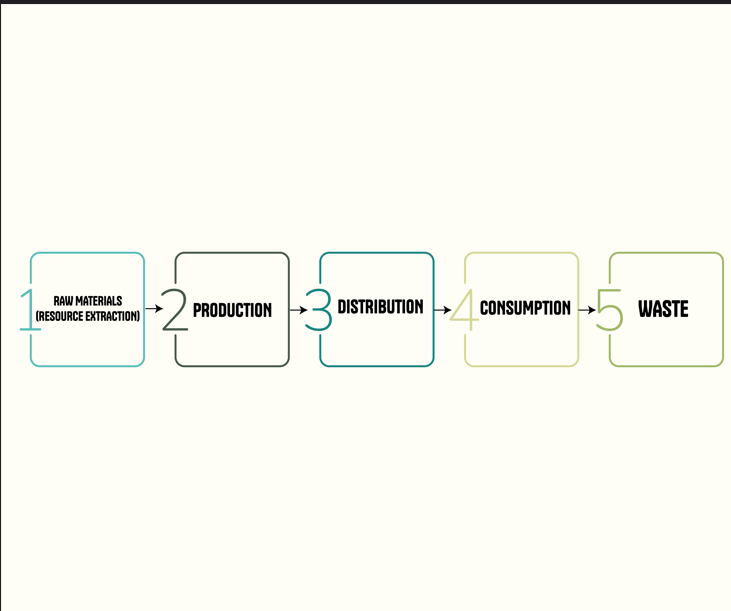
1.Linear economy
This follows RAW MATERIALS (RESOURCE EXTRACTION)- PRODUCTION – DISTRIBUTION – CONSUMPTION – WASTE
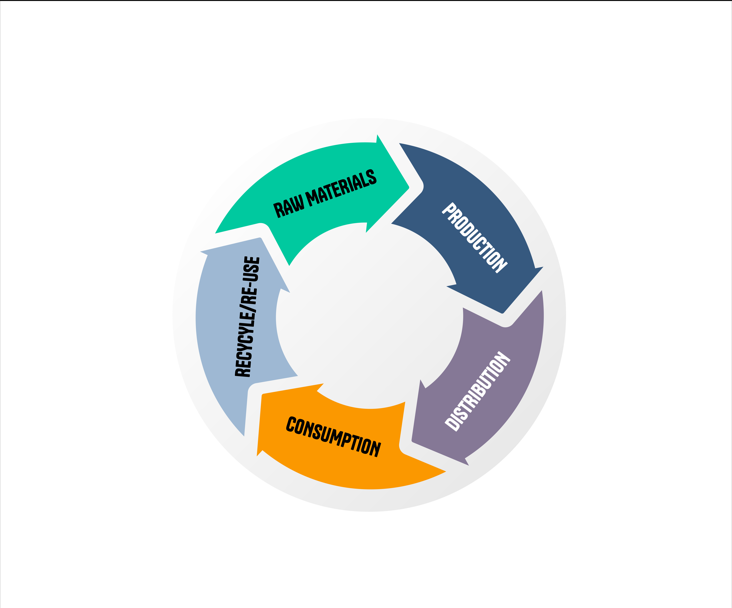
2. Circular /closed economy
This follows RAW MATERIALS – PRODUCTION – DISTRIBUTION – CONSUMPTION – RECYCYLE/RE-USE – BACK TO PRODUCTION
The closed-loop concept is central to the circular economy, enabling a continuous flow of technical and biological materials in the value circle, keeping products, components and materials at their highest utility and value, while reducing waste to a minimum.
Resources may be circulated through a variety of routes, utilizing new technologies and creating new value chains and jobs.
From production and its inputs to the final consumer, circular economy practices can be developed, leading from a linear flow of goods to a circular flow that avoids pollution, prolongs material use, captures value from waste and regenerates organic flows.
Cycle modes
In the agribusiness sector, two distinct circular mode cycles are present: technical and biological.
The technical cycle applies to agro-industrial technologies through maintaining, returning, renewing and reusing agri-processing technologies that support agricultural efficiency, while also minimising waste and providing cost savings.
New business models that share capital-intensive machinery also enable wider use and cost savings. This also applies to non-natural packaging sources, where reuse and recycling are prioritised. As an example, the recent awareness of single-use plastics has led to the resulting bans on plastic bags, pushing food brands to rethink their packaging materials, therefore providing new opportunities for renewable packaging entrepreneurs. This is why we introduced glass packaging for our products
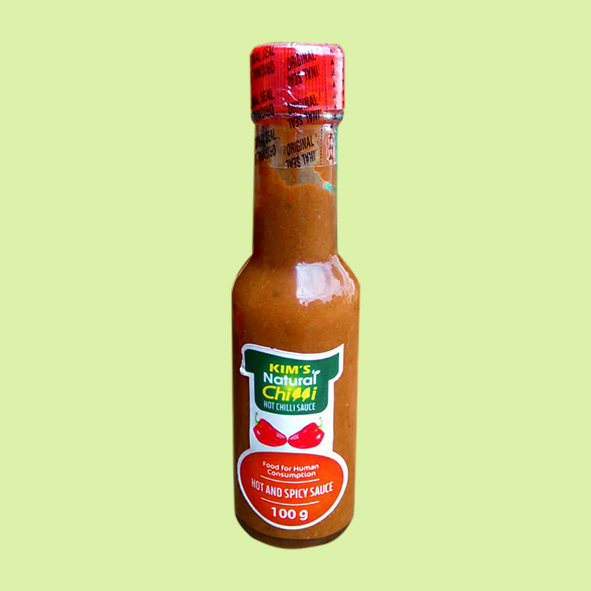
chilli sauce
glass packaging
The biological cycle recaptures value from waste in the system through the reuse of food, utilisation of by-products and food waste, and nutrient recycling.
Waste becomes the input to new products to support crop production, food processing, feed and energy.
Closing input loops minimises discharges, reduces demand on resources, increases resource efficiency, creating circularity in agribusiness practices.
Reusing and recycling agricultural goods is not new, but technological progress has introduced new techniques or made others more efficient, opening ever more avenues for value-added practices.
Furthermore, the industrial size of the current food system provides economies of scale for waste valorization and by-products development
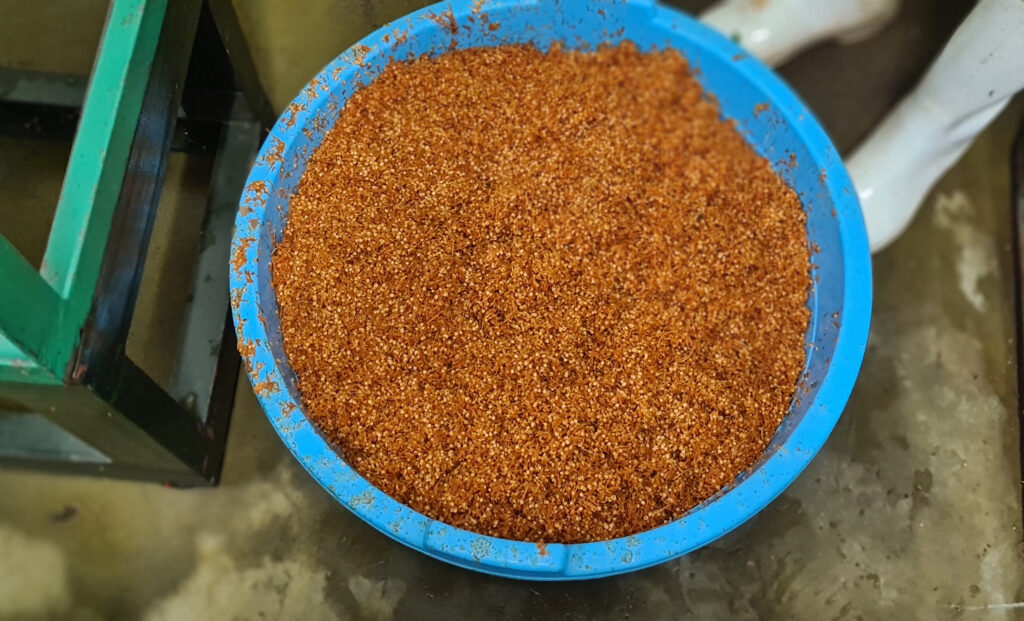
Chilli Sauce Remains
chilli oil from chilli oil remains
principles of the circular economy applicable to the agribusiness sector
Pollution and waste are replaced to become regenerative, avoiding damage to human health and the environment. The pollution of air, land and water should be avoided; petrol base and chemical products are replaced by natural products and renewable energy.
Preserve the value over time and design for durability, reuse, remanufacture and recycle in the technical cycle. Privilege the effective use of biologically based material before it returns to the natural system. Therefore, the principle is to gain value from waste, develop byproducts that could serve as input or open new market opportunities. This component, combined with entrepreneurship, has the potential to create new jobs and business opportunities.Example is (production of chilli oil from chilli sauce remains)
A circular system avoids the use of non-renewable resources and returns valuable nutrients to the soil to support natural regeneration.
In the food system, the principle of replacing pollution and waste would translate into looking at agricultural inputs on the biological cycle, choosing to replace chemical pesticides with organic, replacing monocultures with polycultures, and taking advantage of symbioses of plants as pest control,
To the technical process, where we should privilege reusable packaging and preserve the value of mechanical and agri-processing equipment.
CIRCULAR AGRICULTURAL PRACTICES EXAMPLES
Mixed farming
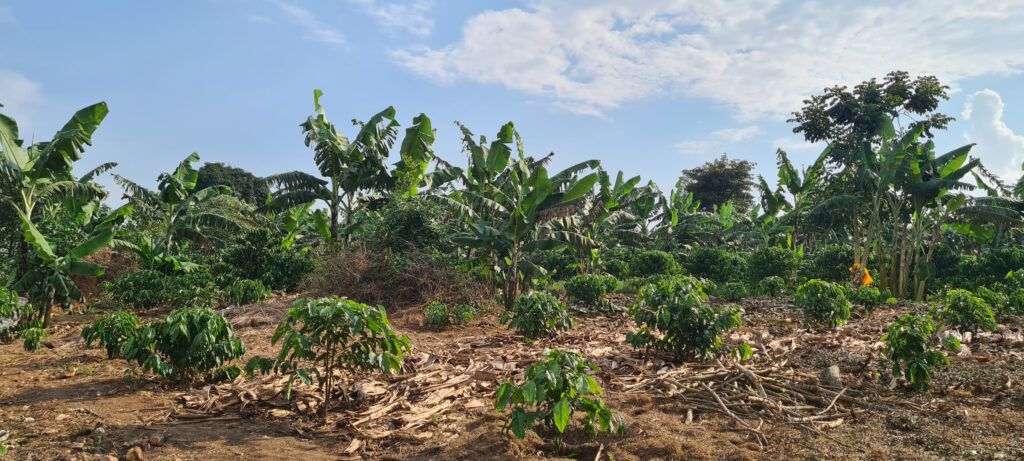
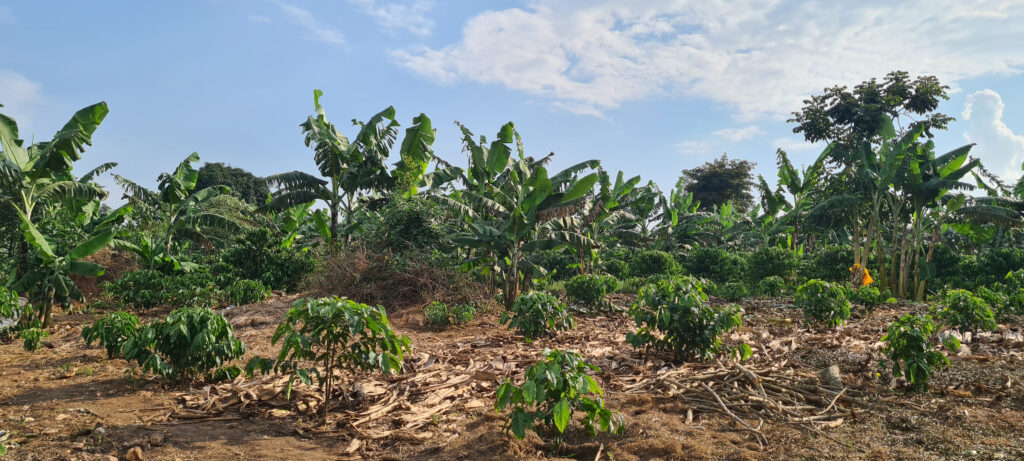
Circular agriculture is closely connected with the concept of mixed crop-livestock farming. Mixed farming, for example, may imply a switch away from mono-crop agriculture to growing a set of interdependent crops like coffee and bananas where the cultivation of one creates favourable conditions for others on the same land. Crop diversity becomes an effective practice to reduce inputs, manage soil fertility, and enhance resilience, and the combined production of different crops and legumes can raise yields in a sustainable way
Banana plantation with coffee plantation combintaion
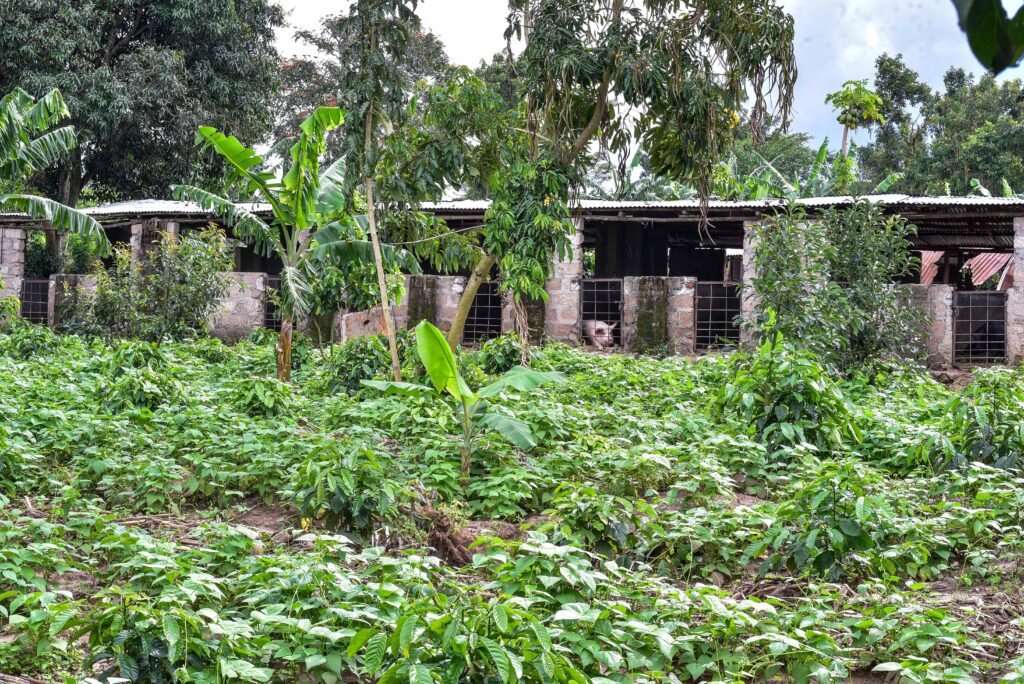
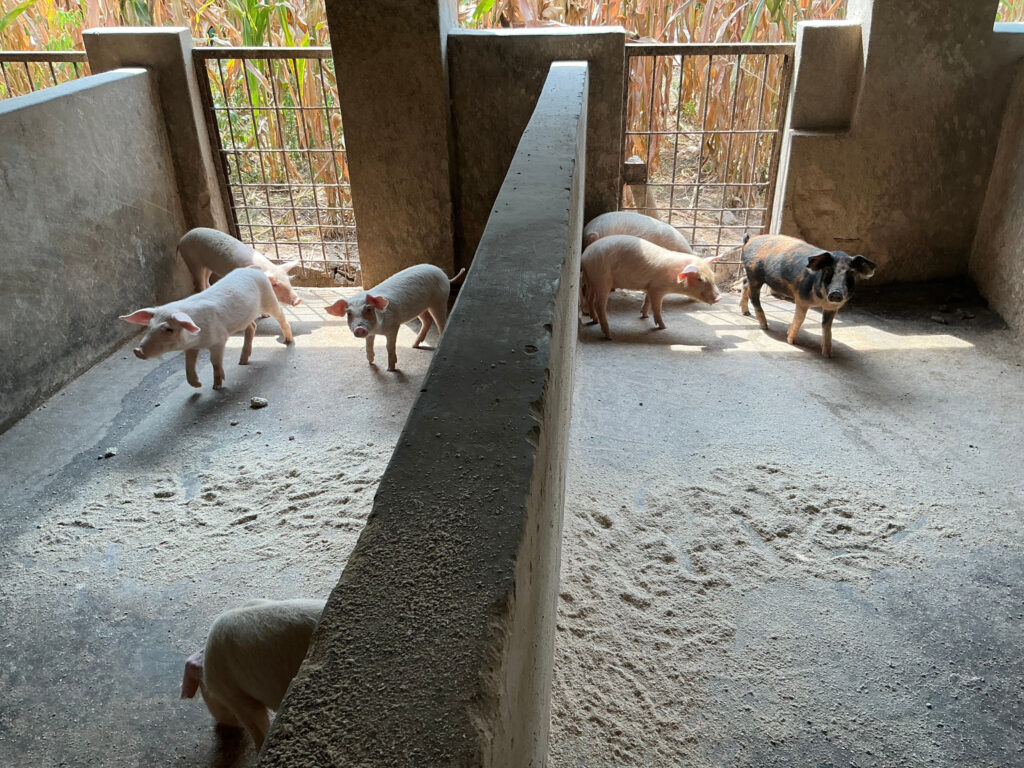
Mixed farming that combines crop cultivation with animal husbandry offers additional opportunities to deepen circular agriculture. Use of locally produced feed and manure instead of imports and chemical fertilisers; the objective is to capitalise on the synergy that exists between crops and livestock to create a circular food system
Piggery on the farm
Organic agriculture
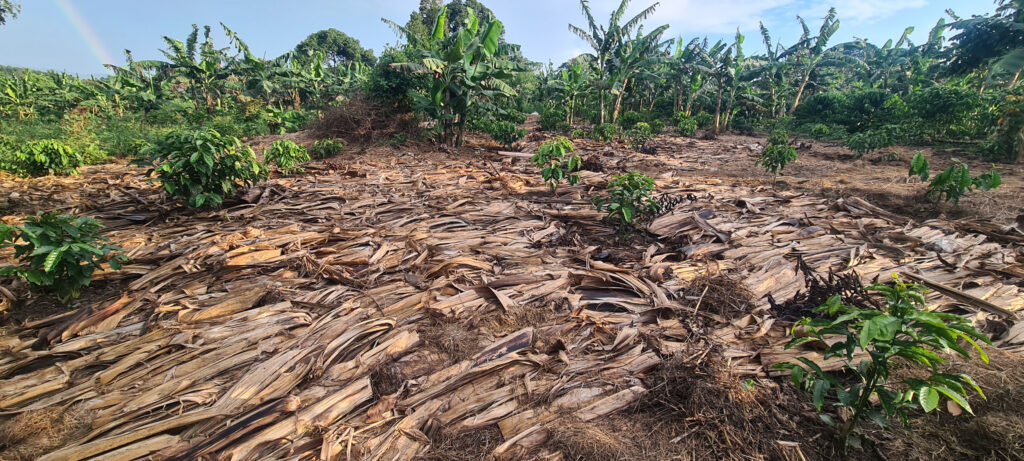
Organic farming is another key element of circular agriculture, striving to eliminate the dependence on chemical fertilisers, pesticides and plastics. Organic farming is also typically more labour-intensive, thereby providing rural employment and development opportunities. Reduced use of pesticides and fertiliser also has gender implications, such as mulching
In many parts of the world, handling of pesticides is considered a male task, so pesticide-free organic farming can promote women’s participation in agriculture
Mulching on the farm using banana stems and leaves
Agroforestry
Agroforestry, defined as tree planting in combination with crops or pastures, is an integral part of circular agriculture. Tree planting can help restore biodiversity in agricultural landscapes, while increasing soil fertility by enhancing the accumulation of organic matter from decaying nature. Agroforestry can also make agriculture more circular by reducing the dependency on chemical fertilisers and pesticides. As agroforestry reduces the need for inputs, it is more accessible for female farmers who often have fewer financial resources and limited access to credit, which can provide new opportunities for women’s empowerment in the rural economy.
In addition, the collection of firewood and fodder is primarily the task of women in rural areas around the world. Agroforestry makes these products available on the farm and thus reduces the time spent by women on such activities, which can contribute to their empowerment
Trees incorporated with the banana & coffee plantation
Water Recycling and Wastewater Use
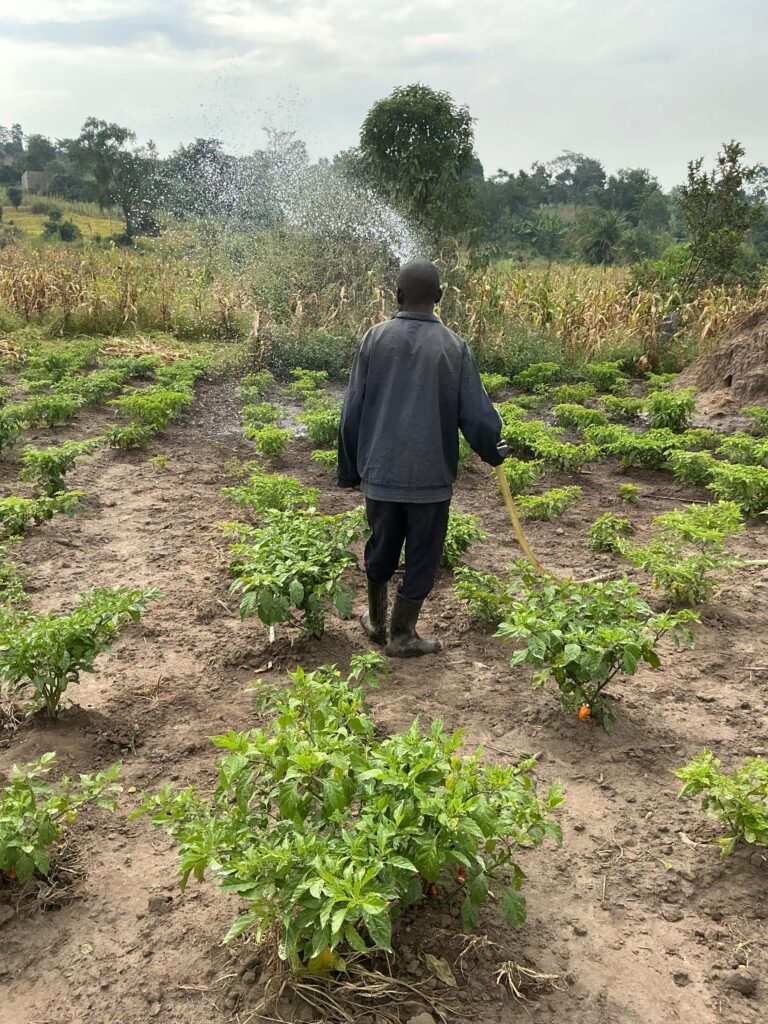
Recycling and reusing irrigation water is an important part of circular agricultural water management. Using wastewater in agriculture could potentially irrigate more farmland. Reusing wastewater for agricultural purposes can reduce pollution, ensure more water conservation and provide additional resources for recharging aquifers.
If adequately treated and safely applied, wastewater is a valuable source of both water and nutrients, contributing to food and nutrition security and the improvement of livelihoods. Livestock, for example, generate a substantial amount of wastewater, which is rich in organic matter and contains nutrients important to agriculture.
Women are also more affected by the lack of sufficient wastewater treatment than men due to their greater exposure to unsafe water at the household level
Irrigation on the farm
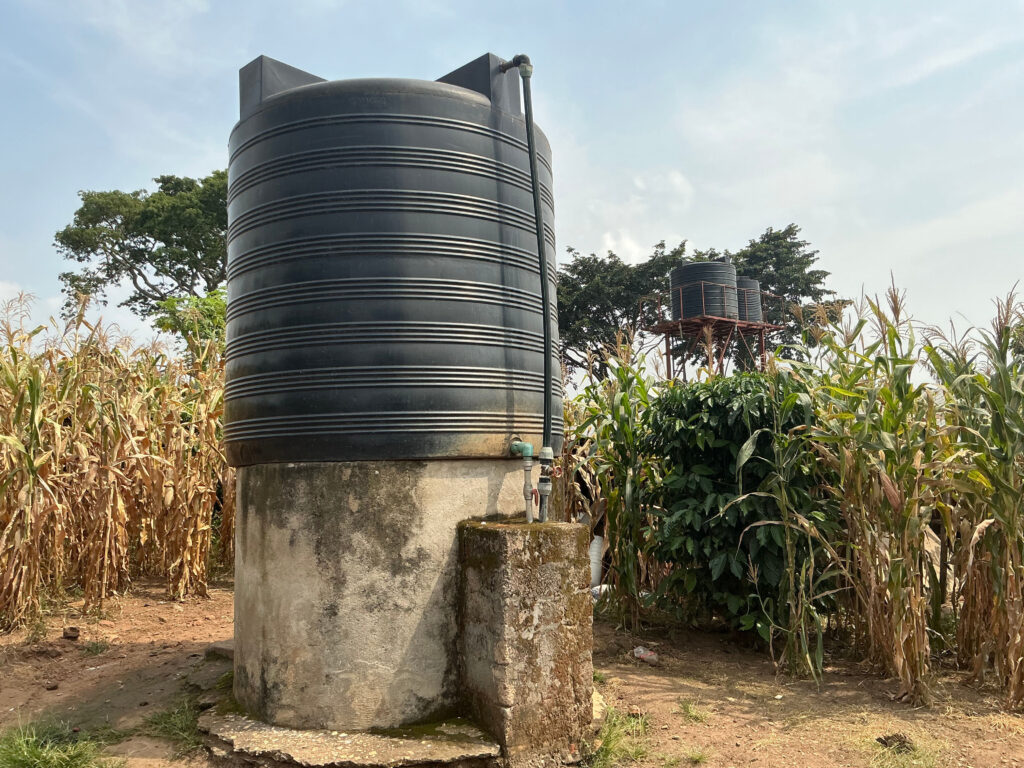
Water reservoir on the farm
Creating Value from Waste: chilli oil case study
In circular chilli sauce production, even the leftovers matter. Leftover chillies are diverted into alternative value-added products like chilli oil
In circular agriculture, the goal is to make the best possible use of available resources and reduce unnecessary waste. One practical example is finding new value for suitable chilli processing by-products generated during the production of chilli sauce.
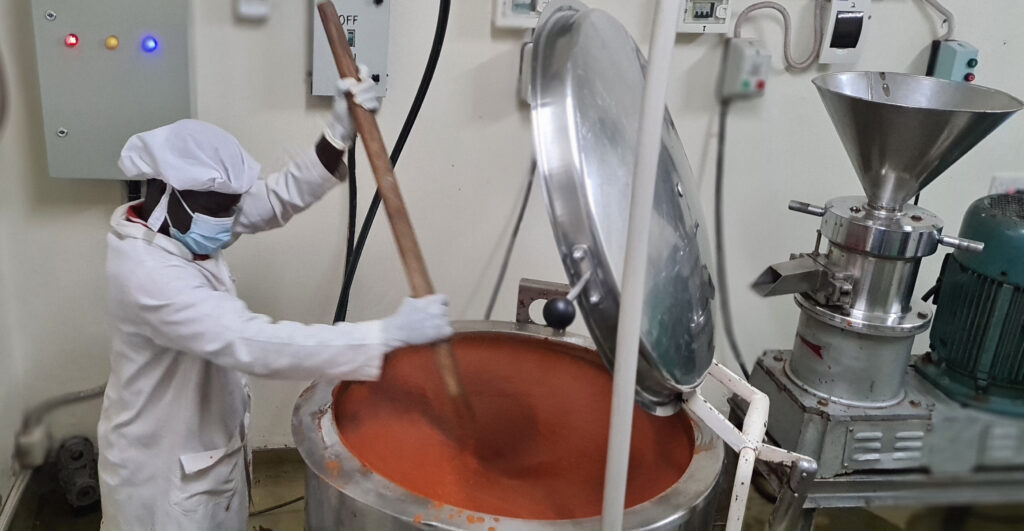
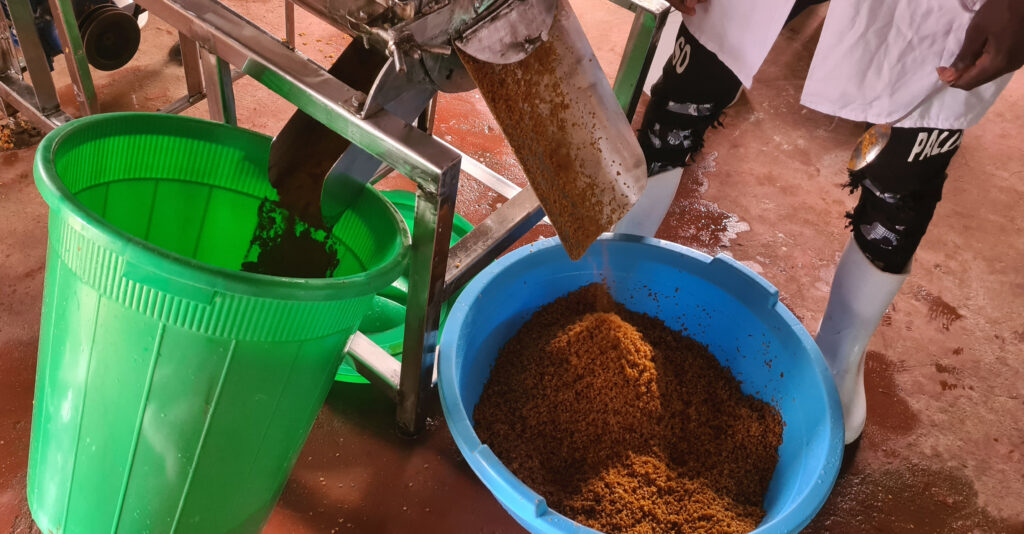
After chilli sauce production, some usable chilli material may remain. Instead of treating all of this material as waste, suitable portions can be further processed under proper food-safety and quality controls to contribute to the production of chilli oil. Through carefully managed processing, the chilli’s flavour and spicy characteristics can be incorporated into oil together with selected ingredients and spices.
This approach helps create additional value from raw materials that have already entered the production system.
The circular journey can be summarised as: Habanero Chilli → Chilli Sauce Production → Suitable Chilli By-products → Further Processing → Chilli Oil
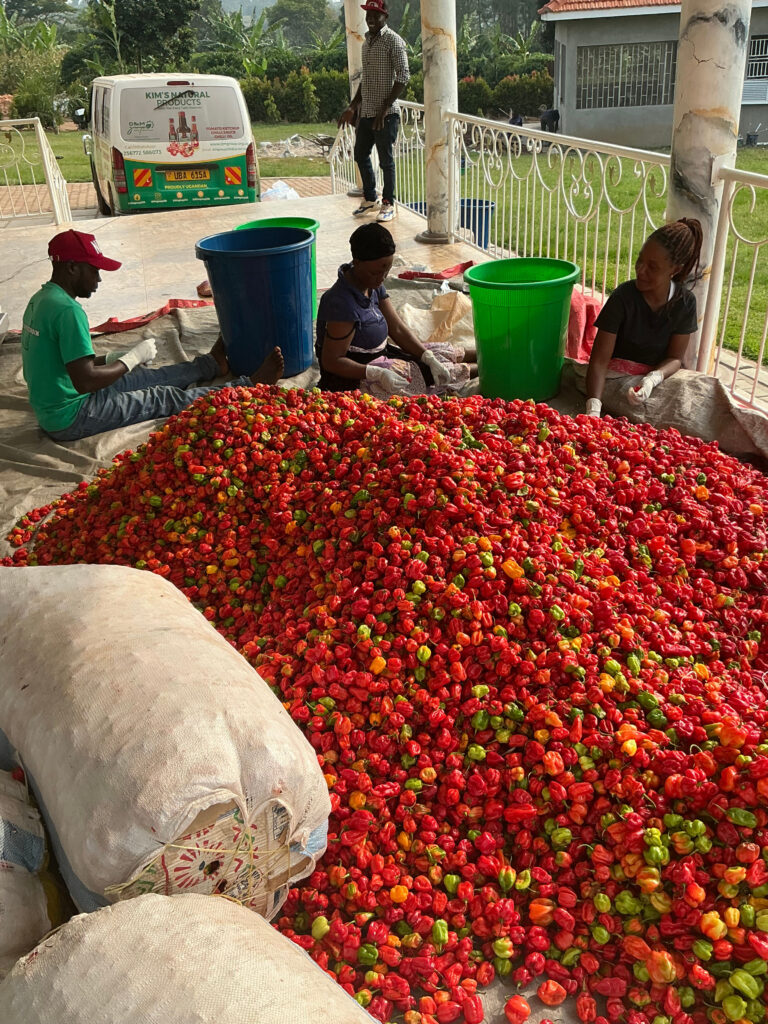
chilli pepper to make chilli sauce
chilli sauce production
chilli sauce
Chilli Sauce Remains
Chilli sauce remain processing
chilli oil from chilli oil remains
By connecting our farm, processing, and product development activities, we can reduce waste, improve resource efficiency, and create more value from every harvest.
In a circular system, the end of one product can become the beginning of another.